BrownStone Chinooks is devoted to fostering the excellent health and wonderful temperament of Chinook dogs. Hard-working Chinooks excel in many activities such as agility, obedience, back yard play, hiking, dog powered sports, search and rescue, and as service dogs. The affectionate Chinook is an excellent family dog matching its activity level to that of its companions - be it strenuous exercise or snuggling on the couch.

Wednesday, January 18, 2023

Kayaking in Paradise

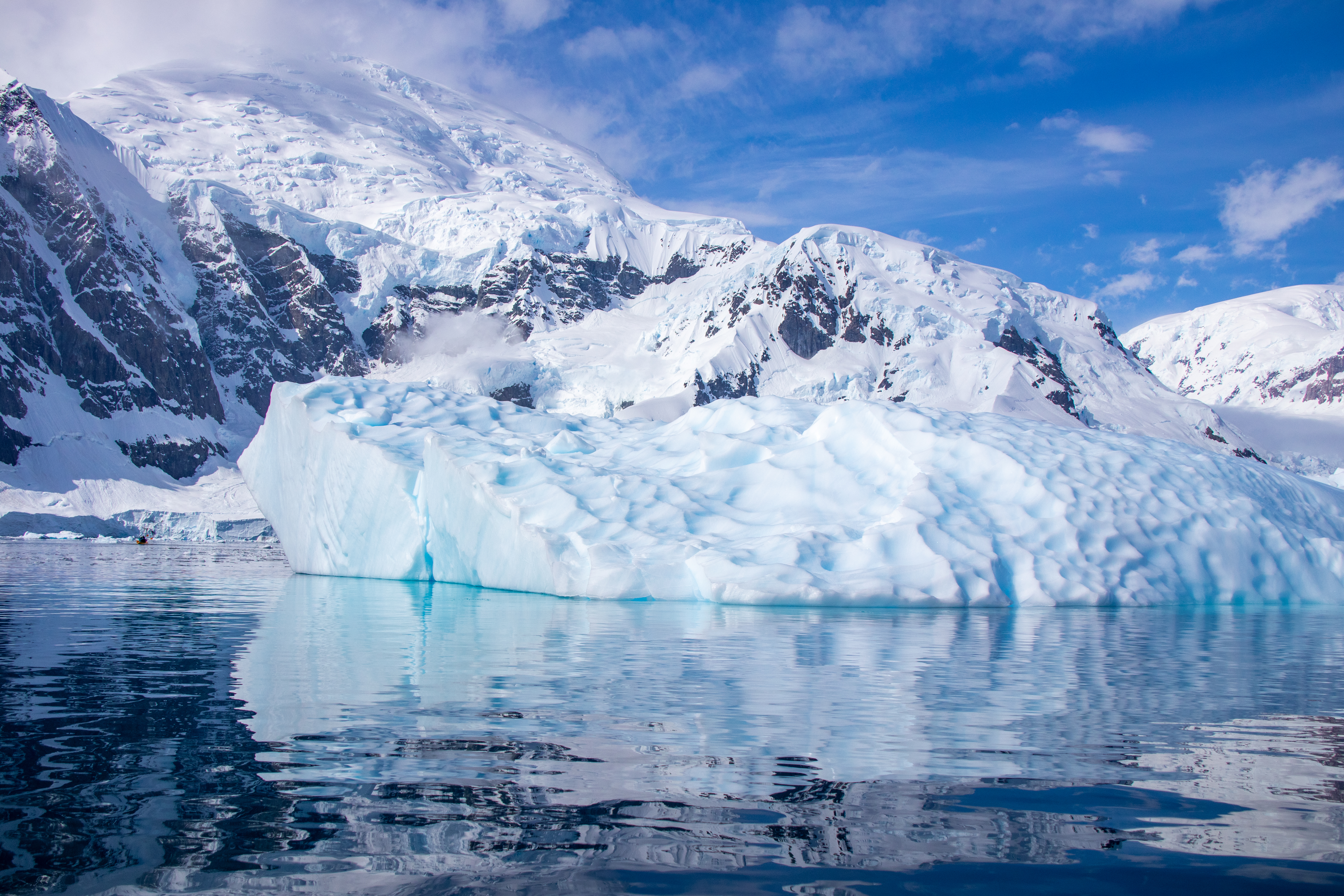
Nothing can compare to kayaking in Paradise. For two hours, my kayaking partner and I leisurely toured Paradise bay. Often we just put our paddles down and floated disbelief of the overwhelming beauty surrounding us.

The movement of our kayak creating the only disturbance of the still water.
We heard a loud crack and turned to watch an enormous avalanche. We braced the boat incase it made it to the sea thus creating a large wave. 
All remained calm on the water.
We were joined by a Antarctic Shag 
Turning into the sun and hearing a "aaark" ruckus, we paddled toward a cliff.

The white in this picture is not snow.

The Antarctic Shag also called the Imperial Cormorant, King Cormorant, Antarctic Cormorant or Imperial Shag are the only species of the cormorant family found in the Antarctic. An adult is about 75-77 cm tall, has a wingspan of 124 cm and, weighs 1.5-3.5 kg. The most defining characteristics are the warty yellow caruncle on the forehead and blue skin surrounding the eye. 
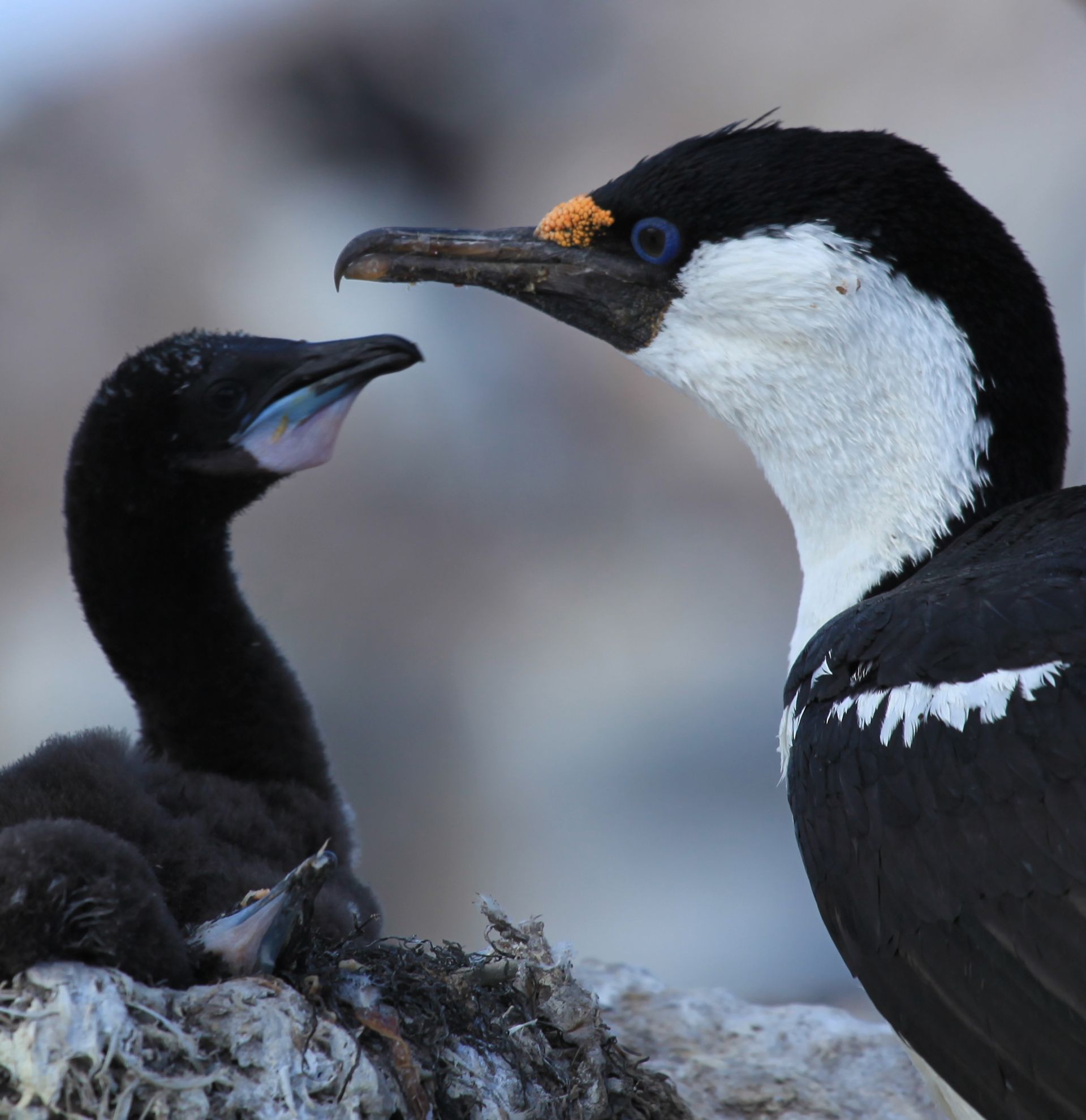
Antarctic Shag with chick at Jougla Point, Antarctica (6063675696).jpg
photo copied from Wikipedia
It is estimated that flight speed can reach 50 km/hour and that Antarctic Shags usually dive 25 meters to feed on fish with a maximum of around 60 meters. "Shags can't predict how much time will be required to dive and capture prey. Once underwater, the bird looks for prey and reacts based on the situation. If a fish is found but the shag doesn't have enough oxygen, it will come back to the surface, thke in the largest amount of air possible, and dive again to capture the prey. This shows that the Antarctic Shag changes its diving strategy based on the situation." ~Wikipedia 

"Many birds can't fly with wet feathers and diving in the water can cause feathers to become fully saturated. Often, you see waterbirds standing with their wings spread to dry off their feathers after diving. Antarctic Shags are unique in this respect and due to their dense inner plumage, this species doesn't need to dry off via wing-spreading like other diving bird species. These dense feathers close to the skin also prevent icy waters from hittting the skin. Additionally, birds having to spread their wings to dry could have further reduced body temperature in an already extremely harsh climate. Therefore, both the cold water and cold air have caused this species to develop over time" ~Wikipedia

Both genders build a nest from feather, seaweed, and ocean debris cemented with excreta and are reused for many years. Between October and December, the females lay 2 or 3 eggs. Both parents help incubate the eggs for 28-31 days. Chicks hatch without protective down and rely on parents to protect them for the first few weeks. We saw adults sitting on nests, molting juveniles, and adults feeding chicks crowding the nests.

Chicks were on the nests so we held our distance. I did not have my long lens with me. Some of the close-up photos are a bit out of focus.

The lighter chicks haven't molted into the white markings of the overworked adults.


Time to turn back to the ship and leave Paradise Bay.

Tuesday, January 17, 2023

Neko Shipboard

Another opportunity to show my colors. Back onboard I asked the Captain if I could fly my yacht club burgee from the stern flag pole. He said "no, you need to fly it from the bow." He left the bridge; took down the National Geo. flag and; hoisted the EYC burgee. Then he proudly took pictures. I think he was the only one on board who knew what a yacht club burgee is.

While the second group trudged up the slope to the Nako Harbor Gentoo colony, those of us back onboard enjoyed coffee on deck. Cameras in hand, we took in the splendor of this place.


And the splendor of the ship. Including the infinity edge hot tub.
All of the decks offered stunning views.


I started out sitting with a group on the Port (sunny) side but we soon got too hot and adjourned to the shade on Starboard.
The views never disappointed. This slope avalanched while we were stationed in the bay.


High Arctic - Day 7

January 17, 2023 - for some reason, this previously unpublished post from my 2019 trip to Baffin Bay inserted itself in my Antarctica blog. opps

Beechey Island
We turned north, bypassing the polar bear populated ice pack blocking access to Prince Regent Inlet and a possible circumnavigation of Baffin Island and continued to sail NW in Lancaster Sound to Barrow Straight. We awoke (sunrise 0539) sailing toward  Beechy Island.
The first European to visit the island was Captain William Edward Parry in 1819. The island was named after the artist William Beechey by his son Frederick William Beechy who was then serving as Parry's lieutenant. Beechy Island is the site of several very significant events in the history of arctic exploration. In 1845, the British explorer Sir John Franklin, commanding  a new but ill-fated search for the Northwest Passage, aboard the HMS's Erebus and Terror, chose the protected harbor of Beechy Island for his first winter encampment. The site was not discovered until 1851 when British and American search vessels anchored nearby.
They found a large stone cairn, along with the graves of three of Franklin's crew but no written record or indication of where Franklin had planned to sail the next season.
There are memorials to Franklin and other polar explorers and sailors on the island.
In 1093, paying respect to  Franklin, Norwegian explorer Roald Amundsen stopped at the island at the beginning of his successful voyage in search of the Northwest Passage.
After nearly 200 years of searching, Franklin's ships were finally located. In 2014 the Erebus was located and with much fanfare the Terror was found in 2016.  When I was in Anchorage earlier this summer, I visited the Smithsonian/National Geographic exhibit of the expedition, continued rescue missions, and the search and finding of the ship.
While we ate breakfast, the crew did a sea and land search for polar bears at Beechy Harbor. We had been scheduled to a tour of the Franklin site. Bears were spotted. On to plan B or maybe C.
We headed to Radstock Bay on Devon Island.
This shoreline reminded me of Inuit dancers.
Devon island looked much the same as Beechy Island
Radstock Bay.
National Geographic Exploration crew believe we are the first ship to ever anchor in Radstock Bay. As we waited for the shore crew to make sure landing zodiacs was safe, we got a presentation on how the land is rising after the weight of the glaciers is removed. Our geologist and arctic biologist explained the landscape, looking something like waves on water, gives a unique look into history and that we would be hiking back centuries as we traversed the land.
Along with rifle toting scientists, our lifejacket stand always awaited us when we hit the shore.
The waves of land released from the weight of glaciers.